
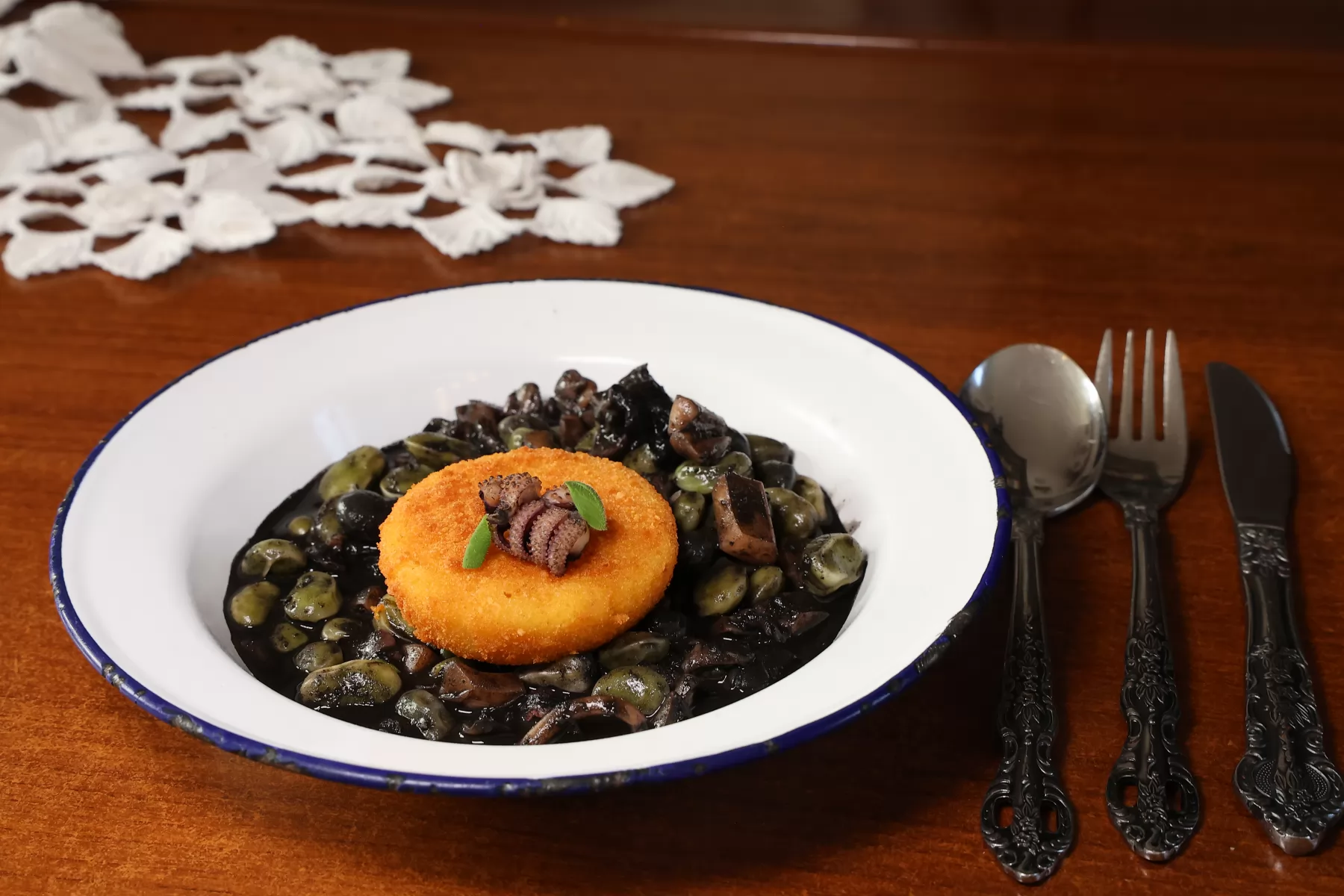
Cuttlefish. Fava. Polenta.
One of my earliest fishing adventures in the waters where I grew up was always the hunt for cephalopods.
And there are several reasons for that.
The first and most important is that our sea — this small corner of the Adriatic — offers almost perfect conditions for such life.
It has depth that breathes, a steady temperature throughout the year, rich underwater springs that bring fresh water and make the sea slightly less salty — just the way these little sea creatures like it.
There are also many patches of soft seabed, a true paradise for squid, octopus, and their majesty — the cuttlefish.
The second reason is simple: hunting cephalopods is one of the most beautiful and purest old fishing crafts.
There isn’t much philosophy behind it.
The setup was a simple line with an artificial fish tied at the end, and about twenty centimeters above it a weight.
You lowered it to the bottom, let the small wooden boat drift with the current or moved slowly with two oars in the direction you wanted.
The lead weight would tap along the seabed, lifting sand and creating a little commotion — and that would excite the cuttlefish.
After that bit of disturbance came the artificial fish, looking lost, vulnerable — the perfect opportunity.
And the cuttlefish, curious and fearless, would fall into the trap.
Once hooked, you pull slowly, without sudden movements, and before reaching the surface you guide her gently toward the landing net.
But the cuttlefish… the cuttlefish is not just an animal.
It’s a story.
Even the ancient Greeks saw it as a creature belonging to two worlds:
to Poseidon, because it lives in the depths and moves with the rhythm of the sea,
and to Nyx, the goddess of the night, because it carries darkness within itself and releases it whenever it wishes to disappear.
The Greeks used to say:
“The cuttlefish is the living shadow of the sea.”
And it truly is — it’s one of the few sea creatures that can create its own night, its own cloud, its own escape.
The sea gave her to Poseidon as a guardian, and Nyx gifted her the blackness that hides, protects, and reveals itself only to those who know how to look.
It has always fascinated me how ancient people could see truth in simple things — just like we here know that nature doesn’t lie, and everything has its order.
And then — the fava bean.
Just as the cuttlefish was connected to Poseidon, the fava bean played a great role in our old folk beliefs about souls and the afterlife.
It was said that every bean carries the voices of our ancestors.
Inside it are their memories, their stories, their experiences — and through it they tell us they are well, that they live in the other world, and that they are among us when needed.
The second connection between the cuttlefish and the fava bean is even more profound, carved into the very logic of nature.
The fava flower has two colors: white and black.
White is the color of the sandy seabed, the very place where the cuttlefish hides, lives, and finds shelter.
And the black spot on the flower attracts insects, drawing them in to drink the sweet nectar and complete pollination.
With the cuttlefish it is the same:
the black ink in her body is her defense, her signal, her life.
Without the black in the flower, there would be no fava beans.
Without the black in the cuttlefish, there would be no cuttlefish.
Nature always knows what it’s doing.
Things are simple when you know how to look.
And there are several reasons for that.
The first and most important is that our sea — this small corner of the Adriatic — offers almost perfect conditions for such life.
It has depth that breathes, a steady temperature throughout the year, rich underwater springs that bring fresh water and make the sea slightly less salty — just the way these little sea creatures like it.
There are also many patches of soft seabed, a true paradise for squid, octopus, and their majesty — the cuttlefish.
The second reason is simple: hunting cephalopods is one of the most beautiful and purest old fishing crafts.
There isn’t much philosophy behind it.
The setup was a simple line with an artificial fish tied at the end, and about twenty centimeters above it a weight.
You lowered it to the bottom, let the small wooden boat drift with the current or moved slowly with two oars in the direction you wanted.
The lead weight would tap along the seabed, lifting sand and creating a little commotion — and that would excite the cuttlefish.
After that bit of disturbance came the artificial fish, looking lost, vulnerable — the perfect opportunity.
And the cuttlefish, curious and fearless, would fall into the trap.
Once hooked, you pull slowly, without sudden movements, and before reaching the surface you guide her gently toward the landing net.
But the cuttlefish… the cuttlefish is not just an animal.
It’s a story.
Even the ancient Greeks saw it as a creature belonging to two worlds:
to Poseidon, because it lives in the depths and moves with the rhythm of the sea,
and to Nyx, the goddess of the night, because it carries darkness within itself and releases it whenever it wishes to disappear.
The Greeks used to say:
“The cuttlefish is the living shadow of the sea.”
And it truly is — it’s one of the few sea creatures that can create its own night, its own cloud, its own escape.
The sea gave her to Poseidon as a guardian, and Nyx gifted her the blackness that hides, protects, and reveals itself only to those who know how to look.
It has always fascinated me how ancient people could see truth in simple things — just like we here know that nature doesn’t lie, and everything has its order.
And then — the fava bean.
Just as the cuttlefish was connected to Poseidon, the fava bean played a great role in our old folk beliefs about souls and the afterlife.
It was said that every bean carries the voices of our ancestors.
Inside it are their memories, their stories, their experiences — and through it they tell us they are well, that they live in the other world, and that they are among us when needed.
The second connection between the cuttlefish and the fava bean is even more profound, carved into the very logic of nature.
The fava flower has two colors: white and black.
White is the color of the sandy seabed, the very place where the cuttlefish hides, lives, and finds shelter.
And the black spot on the flower attracts insects, drawing them in to drink the sweet nectar and complete pollination.
With the cuttlefish it is the same:
the black ink in her body is her defense, her signal, her life.
Without the black in the flower, there would be no fava beans.
Without the black in the cuttlefish, there would be no cuttlefish.
Nature always knows what it’s doing.
Things are simple when you know how to look.